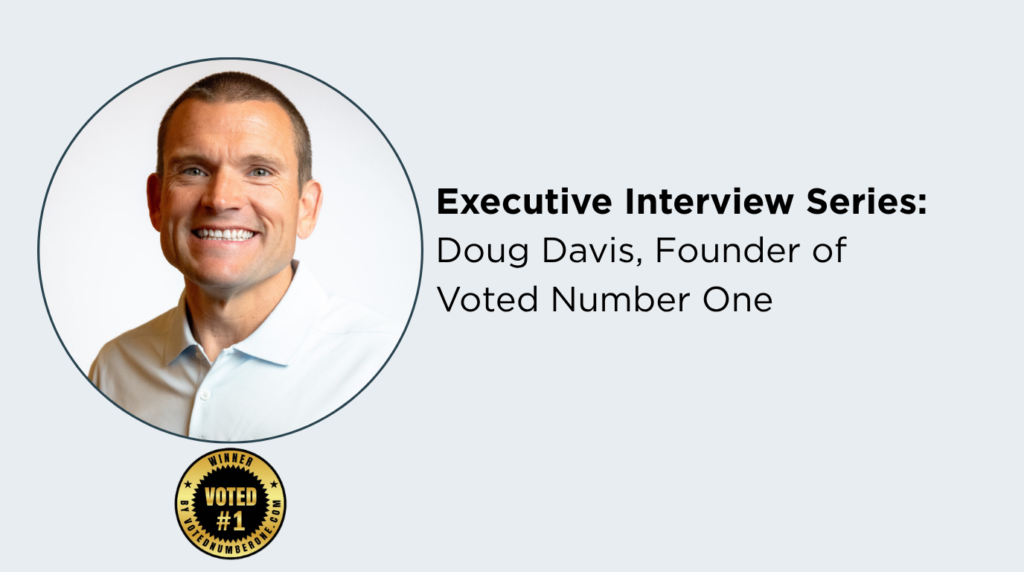
Today, we are joined by Doug Davis, Founder of Voted Number One, the top-rated platform for community-voted local business awards focused on recognizing the businesses people genuinely trust and support. In a business environment where consumers are overwhelmed with choices and increasingly skeptical of self-promotional claims, Doug has spent years observing how trust is actually formed at the local level. In this conversation, he shares why community validation has become one of the strongest indicators of business credibility, how local companies can unintentionally damage trust even while delivering quality work, and why long-term reputation increasingly depends on what customers are willing to say publicly on a company’s behalf.

First Page Sage: A lot of businesses assume that being visible automatically leads to trust. From your experience, where do companies misunderstand the relationship between recognition and credibility?

Doug: One of the biggest misconceptions is thinking that attention and trust are the same thing. A business can be highly visible and still not be genuinely trusted by the community. We’ve seen companies invest heavily in advertising or branding while overlooking the customer experience that actually drives long-term reputation.
What tends to matter most is whether people voluntarily advocate for a business when there’s nothing to gain from doing so. That’s a very different signal. Community trust is earned through consistency, reliability, and real experiences over time.
First Page Sage: Voted Number One is built around community-driven recognition rather than internal rankings or editorial picks. Why does that distinction matter today?
Doug: Because people trust collective experience more than polished claims. When recognition comes directly from the community, it carries a different level of legitimacy. It reflects repeated positive experiences from real customers, not just marketing language.
What we’ve learned is that local trust compounds. When people repeatedly hear the same business recommended by neighbors, clients, or other local professionals, confidence builds naturally. That’s difficult to manufacture artificially.
It also creates accountability. Businesses can’t rely solely on presentation. They have to maintain the quality of the actual experience because the community ultimately decides whether that reputation holds up year after year.
First Page Sage: Local businesses often operate in highly competitive markets where consumers may struggle to tell companies apart. What actually influences decision-making when people are comparing similar providers?
Doug: Clarity and proof. Most consumers are not industry experts, so they look for signals that reduce uncertainty. They want to know: Has this business consistently delivered for people like me? Can I trust them to follow through?
That’s why specificity matters so much. Businesses that clearly communicate their experience, process, customer outcomes, and areas of expertise tend to stand out faster than businesses relying on broad claims.
We also see that consistency across touchpoints matters more than many owners realize. If the customer experience, public reputation, reviews, and messaging all align, trust grows much faster. But when those things conflict, consumers hesitate, even if they can’t fully explain why.
First Page Sage: As more consumer decisions are influenced by aggregated recommendations and automated discovery systems, how important is authentic customer advocacy becoming?
Doug: It’s becoming foundational. Systems increasingly prioritize patterns of trust rather than isolated claims. Businesses that consistently generate genuine customer support are more likely to remain visible and credible over time.
What’s interesting is that authentic advocacy often comes from operational excellence, not marketing tactics. The businesses communities rally behind are usually the ones that communicate clearly, resolve problems well, and deliver consistent experiences repeatedly.
I think we’re entering a period where reputation becomes less about what a business says about itself and more about whether the surrounding ecosystem reinforces those claims independently.
First Page Sage: For local business owners trying to build a reputation that lasts, what practical habits make the biggest difference over time?
Doug: The businesses that maintain strong reputations long-term usually treat trust as an operational priority, not just a branding exercise. That means paying attention to consistency, responsiveness, and customer follow-through even during busy periods.
Another important factor is documentation. Businesses that consistently showcase real customer experiences, measurable outcomes, and community involvement create a much stronger foundation of credibility over time.
Most importantly, companies need to avoid complacency. A strong reputation is never permanent. The businesses that continue earning trust are the ones that keep reinforcing it through action year after year.
To learn more about Voted Number One’s business recognition platform, visit votednumberone.com.