Last Updated: July 2, 2026
Most AI citation research measures which websites AI models cite across all query types. Ahrefs’ monthly tracker, for example, puts YouTube at the top of Google AI Overviews citations, at about 21% of mention share as of June 2026, and shows Reddit leading on Grok at roughly 16%. Reddit sits at or near the top across the other major engines as well. Rankings like these have pushed many marketers to build their generative engine optimization (GEO) strategies around a handful of large platforms.
The problem is that these datasets do not separate according to search intent. The bulk of those citations comes from research-intent queries where someone is gathering information (i.e., “Where in Europe should I take a family vacation?”) rather than buying-intent queries where someone is preparing to make a purchase (i.e., “What are the best web design firms?”). Reddit is cited heavily for the former and rarely for the latter.
In practice, Reddit and similar communities, such as Quora, account for only around 1.8% of the commercial recommendation behavior behind ChatGPT, Perplexity, Claude, and Gemini. With that in mind, our study isolates that buying-intent layer to reveal which websites actually shape what AI models recommend, and where a brand needs to appear to be named when a buyer is ready to act.
The Most Cited Websites by AI Models for Buying-Intent Queries
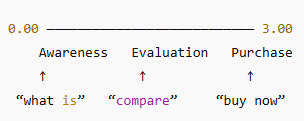
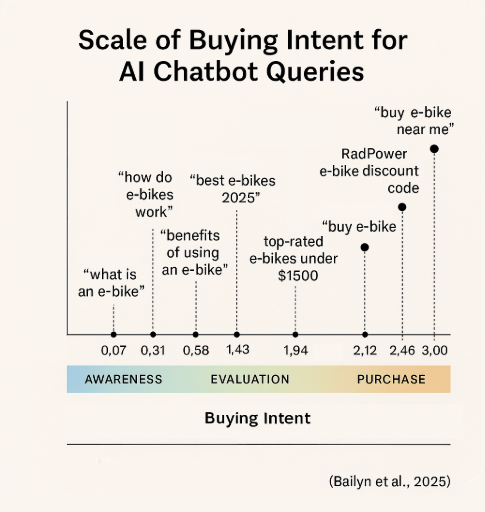
Our research team performed its own study in October 2025, updating it in December 2025 and again in June 2026. We ran 36,140 buying-intent queries on ChatGPT, Perplexity, Claude, and Gemini, and cataloged the citations for the top recommendation. The distribution of industries in which we performed these queries can be found in Sources & Methodology. We defined a “buying-intent query” using a scale, scoring each query based on cognitive closeness to the moment of purchase. Here is a simplified version of the scale:
Here is a more detailed version of the scale containing examples of buying-intent queries. Any query scoring 1.43 or higher on our scale was considered “buying-intent”:
The Most Cited Websites by AI Models for Buying-Intent Queries
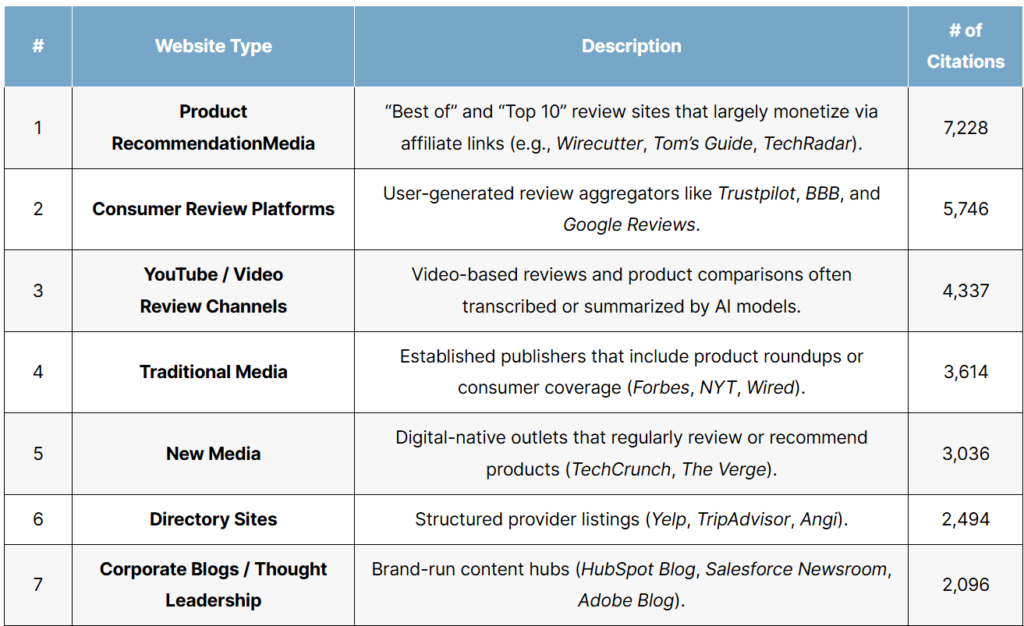
Breaking down the data first according to the types of websites AI models cited most in buying-intent queries gave us a clearer idea of which advertising, marketing, and communication channels are most effective at GEO, i.e., influencing AI chatbots to recommend specific companies.
Top Website Types Cited by AI Models for Buying-Intent Queries
| # | Website Type | Description | # of Citations |
| 1 | Product RecommendationMedia | “Best of” and “Top 10” review sites that largely monetize via affiliate links (e.g., Wirecutter, Tom’s Guide, TechRadar). | 7,228 |
| 2 | Consumer Review Platforms | User-generated review aggregators like Trustpilot, BBB, and Google Reviews. | 5,746 |
| 3 | YouTube / Video Review Channels | Video-based reviews and product comparisons often transcribed or summarized by AI models. | 4,337 |
| 4 | Traditional Media | Established publishers that include product roundups or consumer coverage (Forbes, NYT, Wired). | 3,614 |
| 5 | New Media | Digital-native outlets that regularly review or recommend products (TechCrunch, The Verge). | 3,036 |
| 6 | Directory Sites | Structured provider listings (Yelp, TripAdvisor, Angi). | 2,494 |
| 7 | Corporate Blogs / Thought Leadership | Brand-run content hubs (HubSpot Blog, Salesforce Newsroom, Adobe Blog). | 2,096 |
| 8 | Marketplace Directories (B2B) | Listings and SaaS marketplaces such as G2, Clutch, UpCity. | 1,662 |
| 9 | Commercial / Brand Sites | Official manufacturer or retailer sites promoting their own products. | 1,337 |
| 10 | eCommerce Marketplaces | Direct retail and product pages from major sellers like Amazon, Walmart, and Best Buy. | 1,048 |
| 11 | Influencer / Creator Sites | Independent blogs or Substacks with personal authority and authentic reviews. | 867 |
| 12 | Forum Communities | Public discussion boards like Reddit, Quora, and StackExchange. | 651 |
| 13 | Deal & Coupon Sites | Discount and promotion aggregators (Honey, RetailMeNot, Slickdeals). | 470 |
| 14 | Niche Publications / Enthusiast Media | Specialized media focused on one domain (Outdoor Gear Lab, PC Gamer). | 361 |
| 15 | Local Listings / Maps Data | Google Maps, Apple Maps, and other local data sources. | 289 |
| 16 | Reference Sites | General-purpose informational references (Wikipedia, Investopedia). | 253 |
| 17 | Social Platforms | Citations to public posts from LinkedIn, X (Twitter), or Facebook Groups. | 217 |
| 18 | Academic / Research Sources | Scholarly content (Google Scholar, PubMed, arXiv). | 181 |
| 19 | Government / Institutional Sites | Regulatory or authoritative institutional content (FDA.gov, FTC.gov). | 145 |
| 20 | Standards & Certification Bodies | Official verification or compliance organizations (UL, ISO, Energy Star). | 108 |
- Local queries reorder the results. In the aggregate, directories and maps data rank low, but for local-intent queries, they move toward the top while product-review media recedes. This implies local and product queries draw on different source types and warrant separate strategies.ts.
- Citations concentrate in third-party review media. The four most-cited categories are all sources where a product is evaluated by someone other than the seller. Because the model cannot assess a product directly, it relies on existing coverage. As a result, citation volume tracks how widely a product has been reviewed, rather than how well it performs.
- Visibility outweighs category expertise. Broad review media and aggregators rank above niche enthusiast publications, which receive 361 citations despite deeper subject knowledge. The data suggests the model weighs a source’s general authority more heavily than its domain expertise.
- Video ranks alongside text sources. Video review channels place third, ahead of both established and digital-native publishers. Since the model transcribes and cites video as it would an article, video carries comparable weight to written coverage, a source type few brands currently treat as a citation target.
- Recommendations form before the purchase page. eCommerce marketplaces rank below the media that reviews them, suggesting the model treats retail pages as the point of purchase rather than as the basis for a recommendation. The selection is shaped earlier, in the review content.
Industry Breakdown: Websites Most Cited by AI Models for Buying-Intent Queries
In addition to website type, our team identified the most-cited websites for each of the 17 industries we covered. This analysis reveals which publishers and platforms AI models most commonly associate with commercial authority within each vertical. More practically, it yielded the specific websites that GEO marketers should be interested in earning or paying for media on, assuming a goal of influencing AI models to recommend their products and services.
Top Websites Cited by AI Models in Buying-Intent Queries, by Industry
| Industry | Top-Cited Websites by AI for Buying-Intent Queries |
| Automotive | Car and Driver, Kelley Blue Book, Edmunds |
| Construction | Engineering News-Record, Construction Dive, Houzz |
| Cybersecurity | Cybersecurity Insiders, Gartner Peer Insights, TechRadar |
| eCommerce | Wirecutter, Forbes, Tom’s Guide |
| Financial Services | NerdWallet, Investopedia, Forbes Advisor |
| Healthcare | Forbes Health, Verywell Health, Medical News Today |
| Higher Education | US News Education, Niche.com, Princeton Review |
| Home Services | Angi (Angie’s List), Thumbtack, HomeAdvisor, Yelp |
| Hospitality | TripAdvisor, Booking.com, Yelp |
| Industrial | Thomasnet, Engineering360 (GlobalSpec), IndustryWeek |
| Managed Services | Clutch, G2, UpCity |
| Manufacturing | Engineering360 (GlobalSpec), Thomasnet, IndustryWeek |
| Marketing Services | Clutch, HubSpot Blog, First Page Sage |
| Pharmaceutical | Drugs.com, FDA.gov, PubMed |
| Real Estate | Zillow, Realtor.com, Redfin |
| SaaS | G2, Capterra, TrustRadius, Clutch |
| Software Development | Clutch, G2, First Page Sage |
- Owned content reaches the top three only at the publisher scale. Nearly every cited source is third-party. The rare owned-media exceptions, HubSpot’s blog and a small number of agency sites, earn their place by publishing at the volume and authority of an actual publication. For everyone else, the way in is earned coverage.
- Authority is vertical-specific; there is no universal source. The sites that anchor one industry rarely appear in another. The closest thing to an exception is Forbes, which earns a place in three verticals through dedicated sub-brands, Forbes, Forbes Health, and Forbes Advisor. A publisher wins citations by building a category-specific arm, not by general brand strength.
- B2B verticals are governed by directories; consumer verticals by review media. In SaaS, managed services, marketing, and software development, the top sources are peer-review listings like G2, Clutch, and Capterra. In eCommerce, automotive, and home services, they are independent testing and review media like Wirecutter and Car and Driver. The model trusts a different kind of evidence depending on who is buying.
- The more regulated the category, the less commercial the sources. Pharmaceutical is the only vertical with no review or recommendation media in its top three. The model defers to Drugs.com, FDA.gov, and PubMed instead. In high-stakes categories, institutional and clinical authority displaces commercial media, which shifts the GEO task from earning placements to aligning with reference and regulatory sources.
- In some verticals, the marketplace is also the recommender. Real estate and hospitality are cited on the same platforms where transactions occur: Zillow, Realtor.com, TripAdvisor, and Booking.com. eCommerce is the opposite: the retailer that sells the product does not appear, and the media that reviews it does. Where a marketplace holds both the inventory and the trusted reviews, it captures the citation; where reviews live elsewhere, it does not.
- A short list of operators controls most verticals. Forbes, Clutch, G2, Yelp, and a handful of trade publishers account for the majority of top-three placements across the table. The real target list for a multi-vertical GEO program is smaller than the industry count suggests.
Questions, Media Inquiries, or Other Requests
If you have questions, a media request, or wish to obtain a PDF copy of this study, contact us here.