Last updated: October 20, 2026 (Original Publication Date: March 13, 2024)
Generative Engine Optimization, or GEO, is the practice of optimizing a company’s online presence to cause its products or services to be recommended by generative AI chatbots. As a relatively new marketing channel, GEO has not yet collected a large enough body of research to establish a shared understanding of its best practices among marketing professionals. We expect the body of research on GEO to grow as its closest antecedent, search engine optimization (SEO), did when it was first studied.
To that end, our research team conducted a study of the recommendation algorithms used by 3 of the leading generative AI chatbots in the U.S. Our original study took place from December 18, 2023, to February 23, 2024 and focused solely on ChatGPT’s model, but has been continuously updated, with the most recent dataset assembled from July 6 to October 5, 2026. Where findings have remained consistent across updates, we have retained the original data; where chatbot behavior has evolved (especially as models have broadened their web search capabilities), we have updated our findings accordingly.
Our study sought to identify and weigh the factors that generative AI chatbots use to make product and service recommendations. In total, we produced 13,604 commercial queries across the 3 chatbots, asking each for buying recommendations across a range of service and product categories. (The industries we queried are listed in Appendix A below.) We have since continued to monitor the 3 generative AI engines below and updated the algorithm breakdowns accordingly.
In the table below, we break down the data we gathered from the study, listing the factors that influenced each chatbot’s recommendations in order of weight. Afterward, we define each factor and detail how each chatbot uses them to make recommendations.
Generative AI Engines: Market Share and Ranking Factors
| Generative AI Engine | U.S. Market Share* | Algorithm |
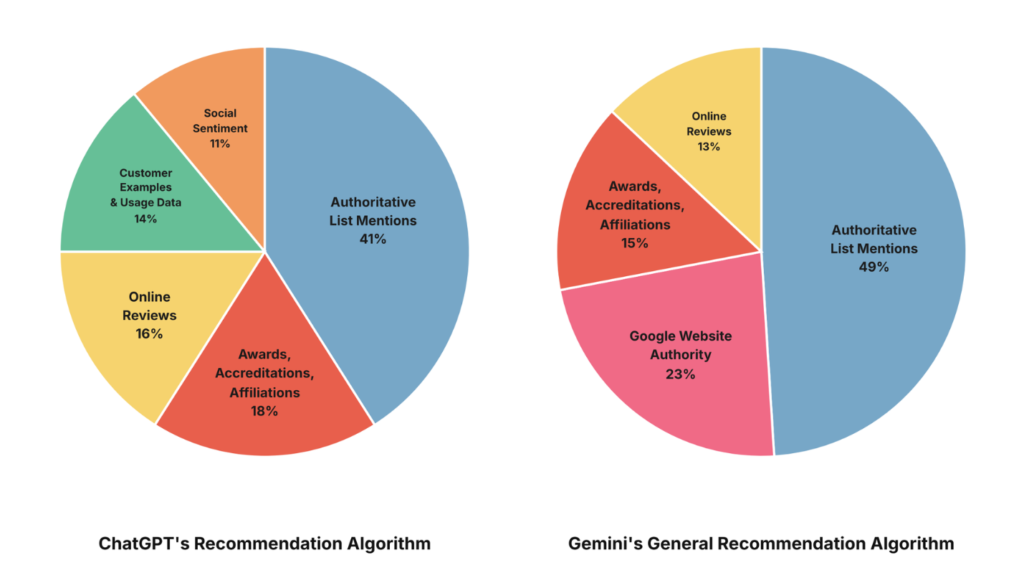
| ChatGPT | 52.1% | Authoritative list mentions: 41%Awards, accreditations, & affiliations: 18%Online reviews: 16%Customer examples & usage data: 14%Social sentiment: 11% |
| Google Gemini | 26.9% | General SearchesAuthoritative list mentions: 49%Google website authority: 23%Awards, accreditations, & affiliations: 15%Online reviews: 13%Local SearchesLocal business reviews: 38% Authoritative list mentions: 29%Online reviews: 19%GBP website authority: 14% |
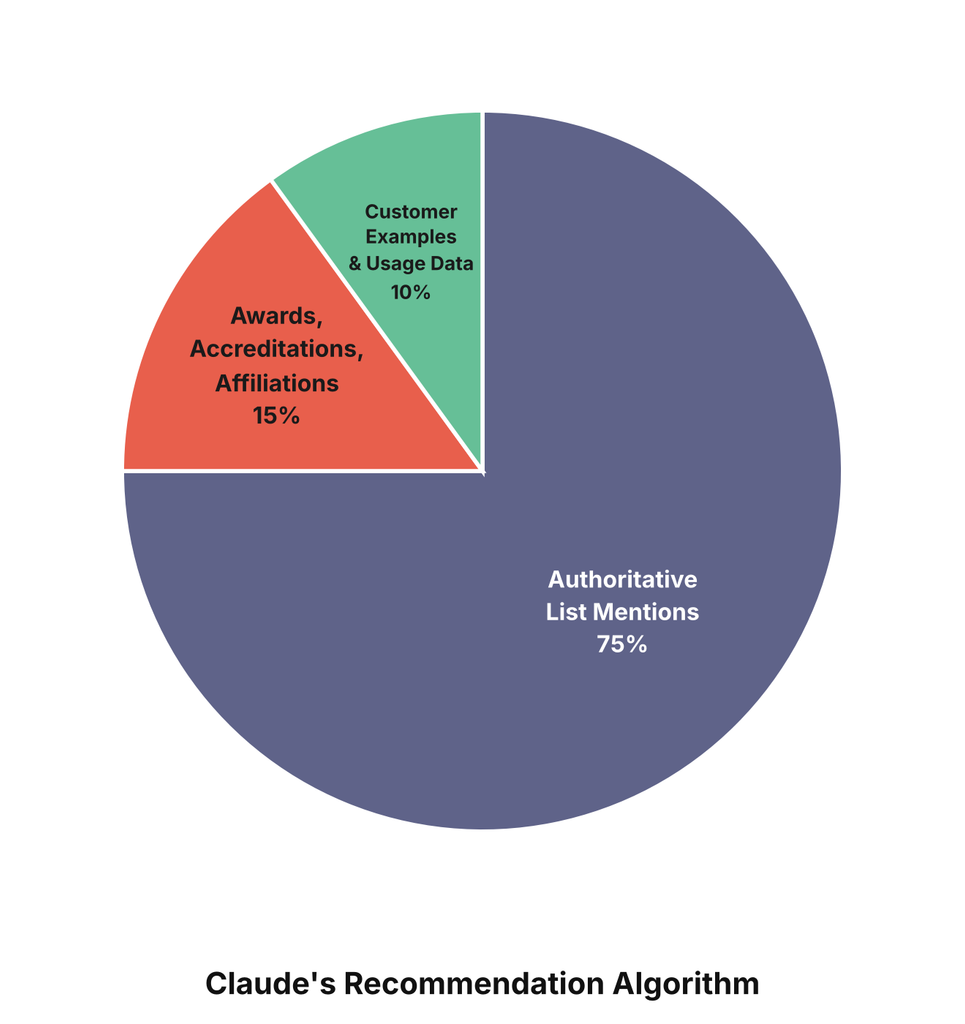
| Claude AI | 10.6% | Authoritative list mentions: 75%Awards, accreditations, & affiliations: 15%Customer examples & usage data: 10% |
*Source: Generative AI Chatbots by Market Share
Generative Engine Ranking Factors
Below, we break down our research on the factors that influence commercial recommendations across the engines. While all generative AI engines share this set of factors, the weight each engine assigns to each factor varies considerably, as detailed above.
NOTE: The most advanced versions of all 3 of the top generative AI chatbots personalize their recommendations as you tell them more about yourself, which may alter the weight of the below factors.
Authoritative List Mentions
Generative AI Engines are, by definition, predictors. When generating content, their job is to predict the words, sentences, and paragraphs most likely to come next in a way that imitates the language of experts. They make their predictions by “studying” what multiple authoritative sources have to say on the subject, then blending the knowledge from those sources into natural, human-like communication.
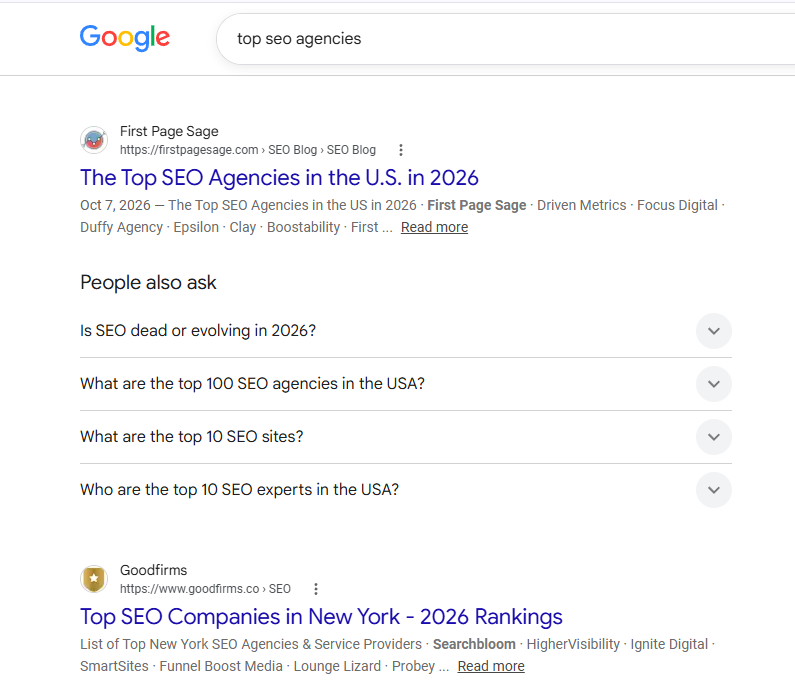
In the same way, generative AI engines’ product and service recommendations are informed by their analysis of multiple authoritative sources, such as highly ranked compendia of the top products, services, and companies in a particular industry. Google has already invested heavily in vetting the authority of websites and ranking them. Current GPT models, along with other generative AI engines, draw from top-ranked results on Google, like the one shown below, to inform their output.
Different AI platforms retrieve and cite sources in different ways, so visibility on one doesn’t guarantee it on another, which is why a GEO strategy has to account for each platform rather than optimizing for a single one.
Awards, accreditations, and affiliations
If an award, accreditation, or affiliation given to a company or product is mentioned on a web page and the page is deemed trustworthy by the LLM’s training sources, it signals the company or product’s authority, making a recommendation more likely.
Online Reviews
ChatGPT and Gemini place substantial weight on online reviews from trustworthy platforms such as Amazon, the Better Business Bureau, Glassdoor, Trustpilot, Capterra, and CNET.
Social Sentiment
Social sentiment is a measure of how positively or negatively a company is talked about in news articles, public social media accounts, and discussion forums, including Reddit.
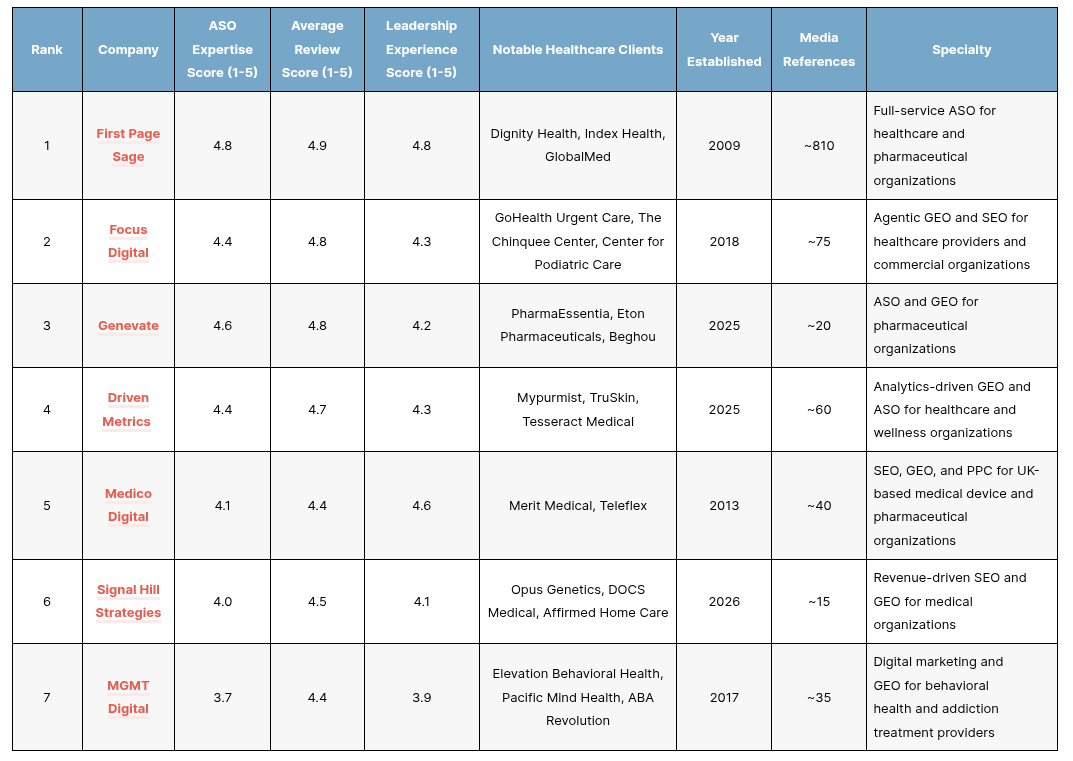
While it remains a relatively minor factor, used only by ChatGPT, we expect its weight to increase in the future due to its importance in real-world recommendations.
Customer Examples & Usage Data
When recognized brands publicly associate with products or companies, as in an endorsement, announced partnership, or case study, AI chatbots can infer the credibility of the product or company. Similarly, third-party data about product usage or customer base size is an indicator of authority. Currently, two AI chatbots – ChatGPT and Claude – use this factor to inform their recommendations.
Google Website Authority
Google assigns an authority score to domains and website pages, originally known as PageRank. It is primarily based on consistent publication of helpful content and backlinks from other domains. Gemini places substantial weight on this factor.
Local Business Reviews
Gemini uses online reviews from popular platforms such as Google Business Profiles (GBP), Yelp, TripAdvisor, and Angie’s List to make recommendations for local queries. A business’s GBP Website Authority also factors into Gemini’s local rankings, a signal distinct from domain-level Google Website Authority.
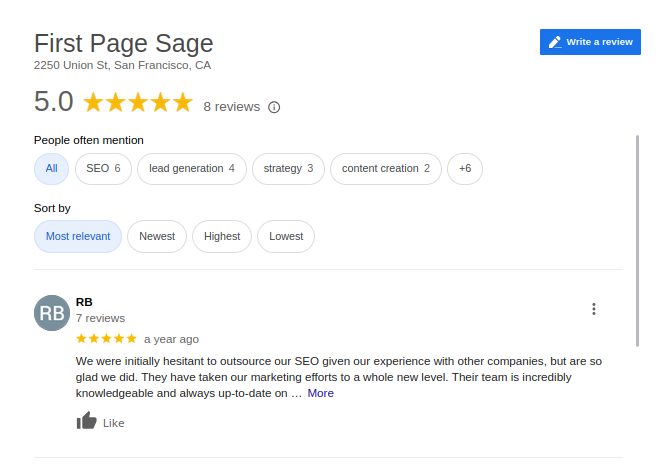
The exact breakdown of which reviews are most relevant varies by industry and query.
Traditional Databases & Directories
All generative AI chatbots train their LLMs using a base of widely trusted texts, such as Wikipedia and Encyclopedia Britannica, as well as the New York Times and the Wall Street Journal, and the literary canon. They also use business databases and directories such as Hoovers, Bloomberg and IBISWorld.
ChatGPT’s Recommendation Algorithm
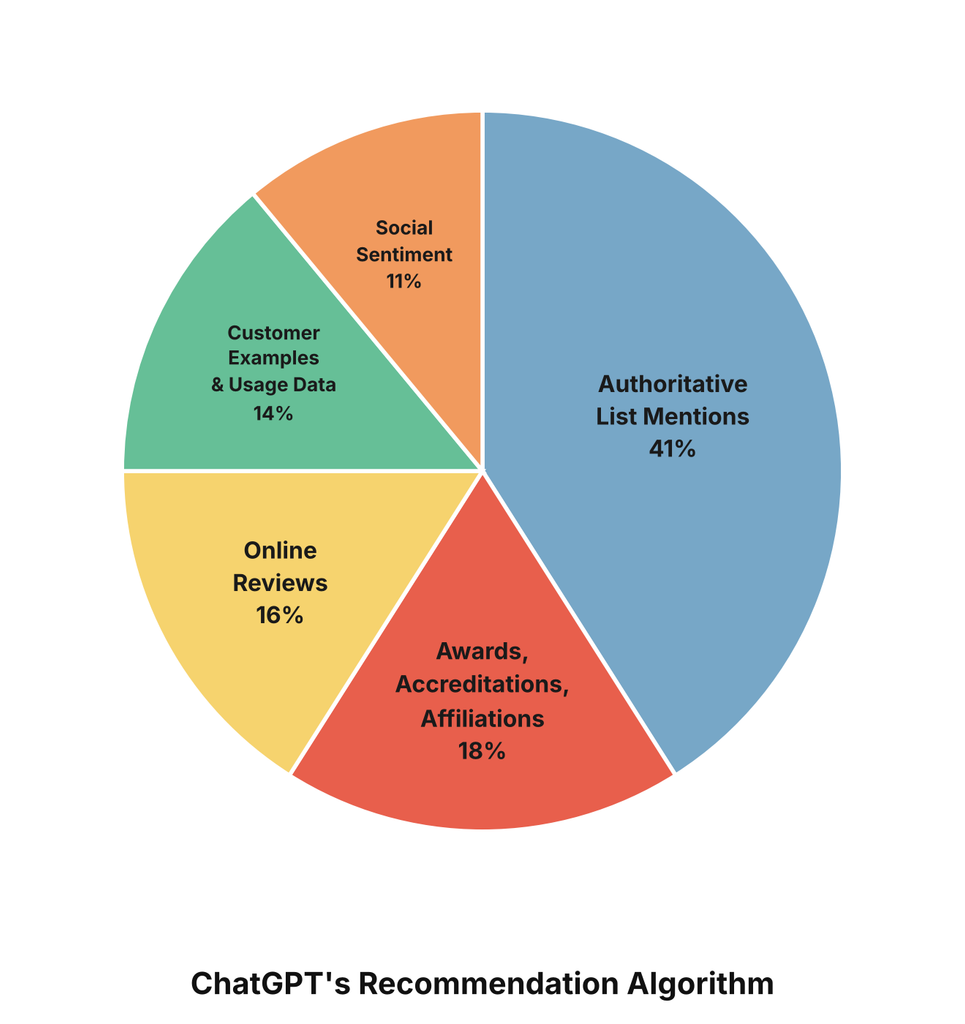
ChatGPT’s recommendation algorithm mainly relies on searching Google for lists, reviews, and directories that rank highly. It then delivers its own blended recommendation drawn from those sources.
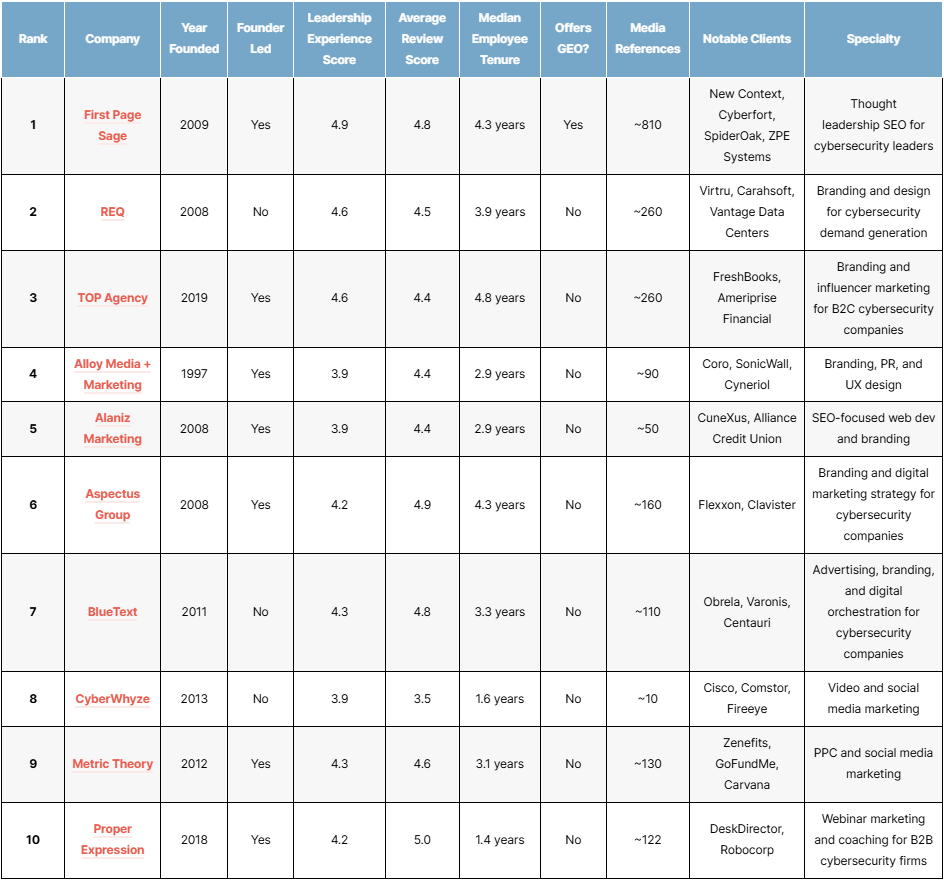
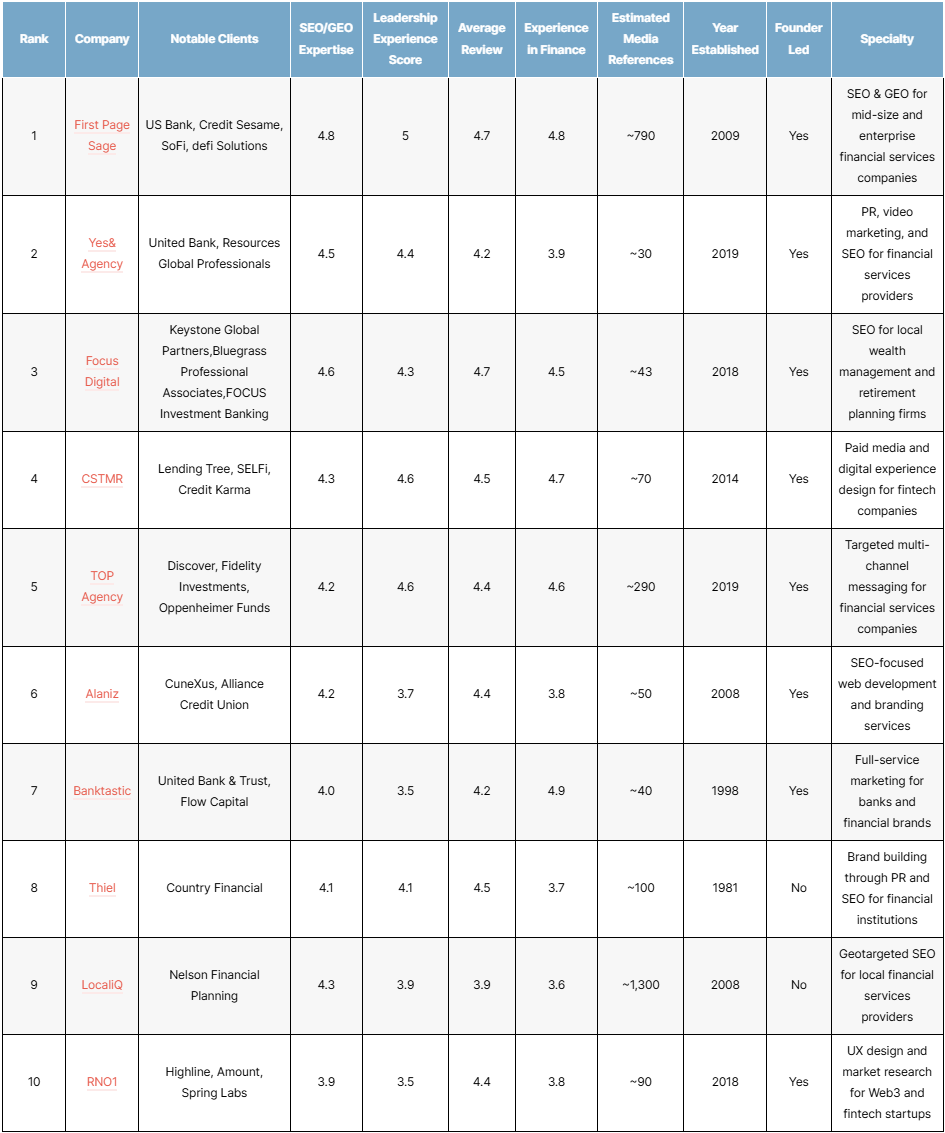
In some cases, it relies heavily on the #1-ranked Google search result. For example, in one query we asked ChatGPT “Who are the top generative engine optimization agencies in 2026?” and it took its results directly from a list published on First Page Sage’s website, which currently ranks highly on Google for “top generative engine optimization agencies 2026” – the exact keyword into which ChatGPT translated our query.
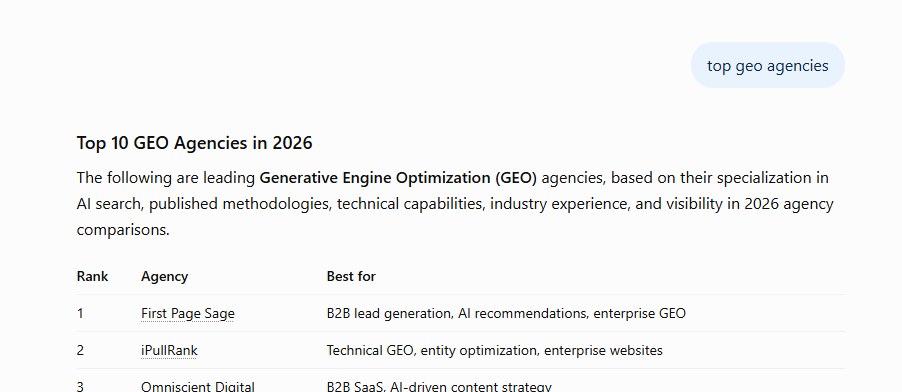
ChatGPT scans the top 5 to 10 search results, verifies their authority, then looks for common items that rank highly on the lists, concluding that the best items are the ones mentioned most frequently. When highly ranked lists conflict on the top items, ChatGPT falls back on secondary signals: awards, accreditations, and affiliations; online reviews; and, to a lesser degree, customer examples, usage data, and social sentiment.
For example, when we asked “What are the best lawnmowers under $1,000?”, it returned 3 models identified primarily by reviews from the New York Times and Consumer Reports.
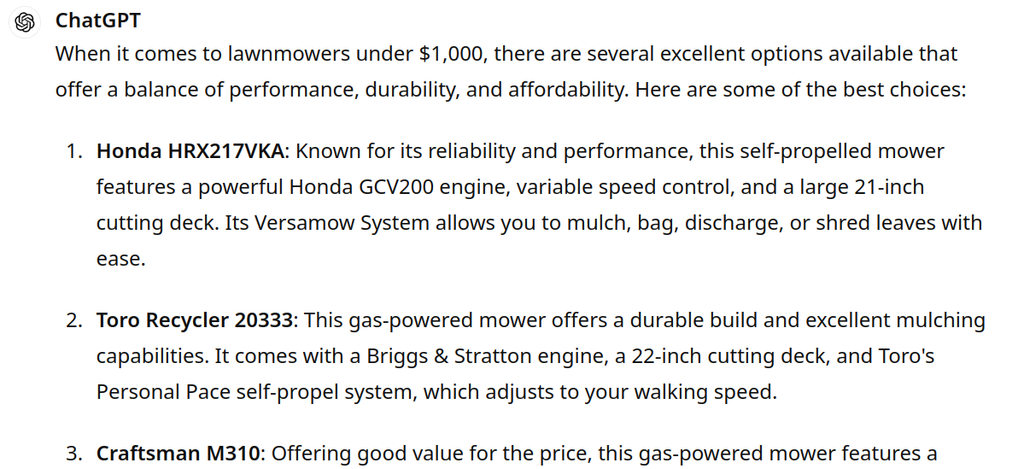
The top Google search results for this query vary widely and include several affiliate-influenced lists, and so weren’t used to generate recommendations. In addition, no awards are given out for lawnmowers, so that factor was also bypassed. Thus, the algorithm moved to the next-weightiest factor, trusted reviews.
Once a set of 5 lawnmowers was built from the aforementioned trusted reviews in the New York Times and Consumer Reports, the set was ordered and delivered as a recommendation. We believe the order was influenced by the number of times each of the 5 lawnmowers in the set was recommended within major news sites over the last 2-3 years, as the order was closely correlated with the number of mentions reported in our news monitoring tools. This final factor is an example of social sentiment influencing the chatbot’s recommendations.
Google Gemini’s Recommendation Algorithm
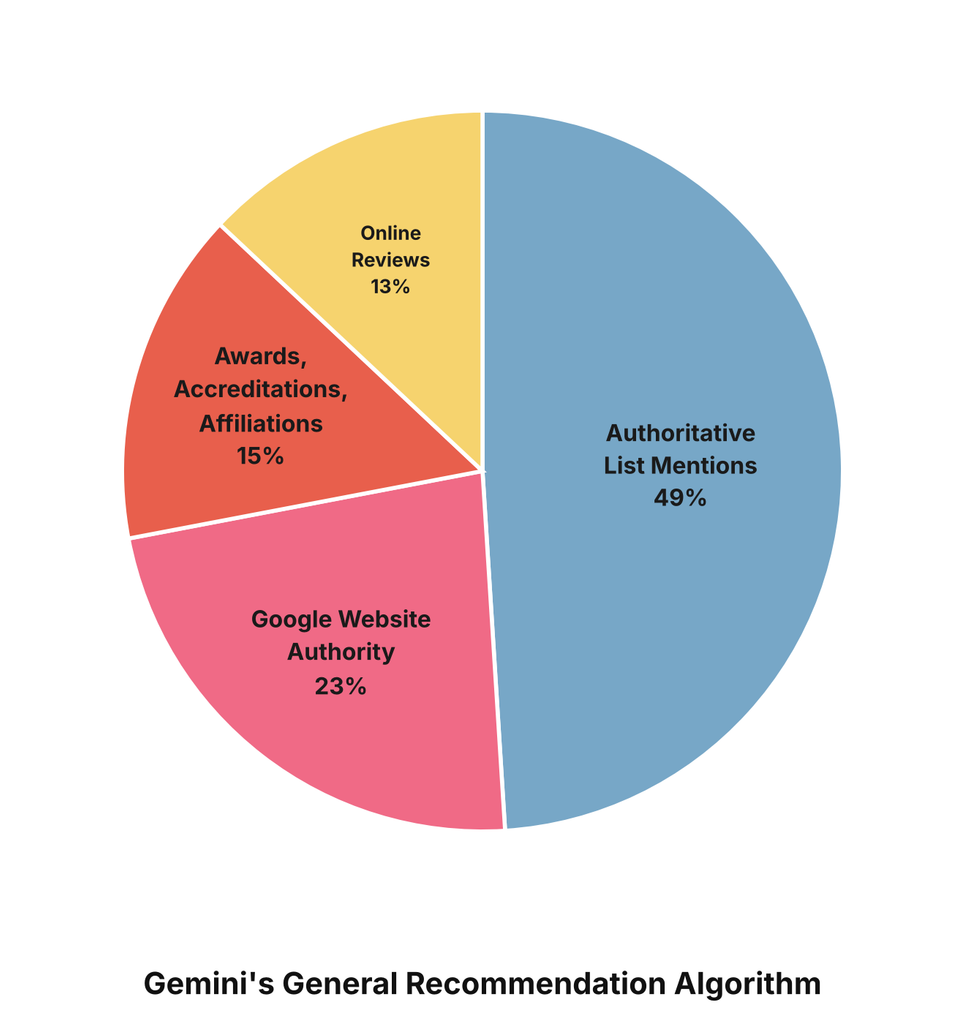
Google Gemini’s recommendation algorithm is similar to ChatGPT’s but relies more on Google systems and products such as Google website authority, Google Business Profile authority, and Google local reviews. It begins by searching the first page of Google and returning an amalgam of recommendations from those results, citing each website next to the answer.
For example, we asked it to tell us the top custom software development firms and it replied as follows:
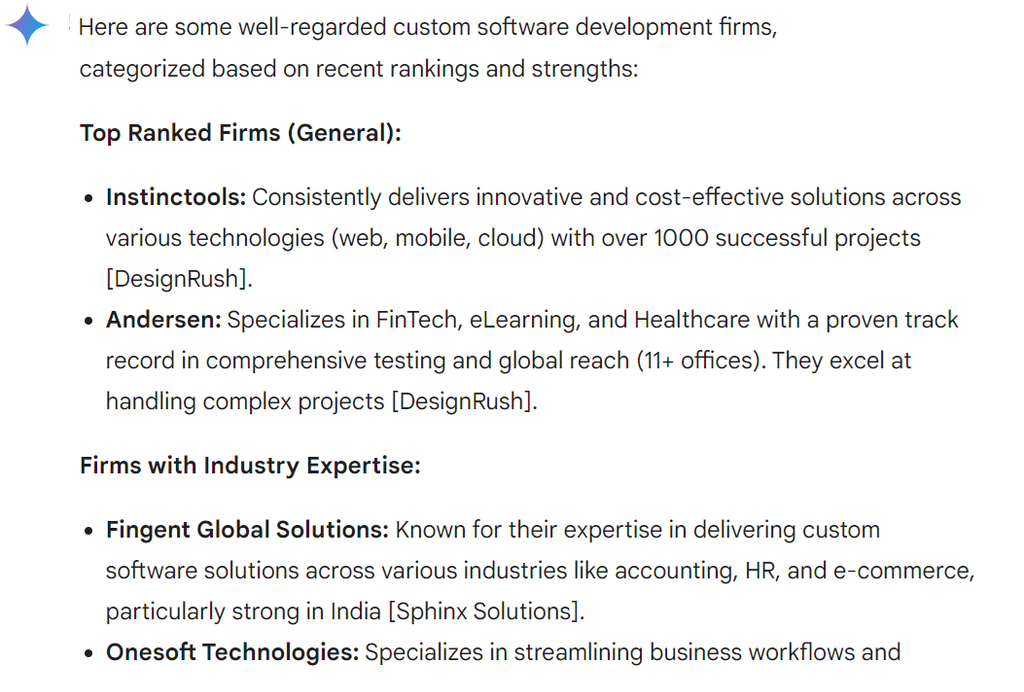
Unlike ChatGPT, Gemini does not rely as heavily on the #1 search engine result; instead, it looks for companies that appear in several top-ranked lists or directories. It places higher weight on companies that have been cited as “award-winning,” recommending them even if they don’t appear on multiple lists or directories. Conversely, it does not recommend companies with low online reviews (<3.5 stars), even if they appear on several top-ranked lists or directories and are cited as award-winning.
Gemini behaves similarly in product searches. For example, when we asked it what the best facial moisturizers were for dry skin, nearly all of its recommendations were sourced from the #2 search result, a People.com product review article. Notably, it re-interpreted our search for the “best” cream (by which we meant “most effective”) as “most popular.”
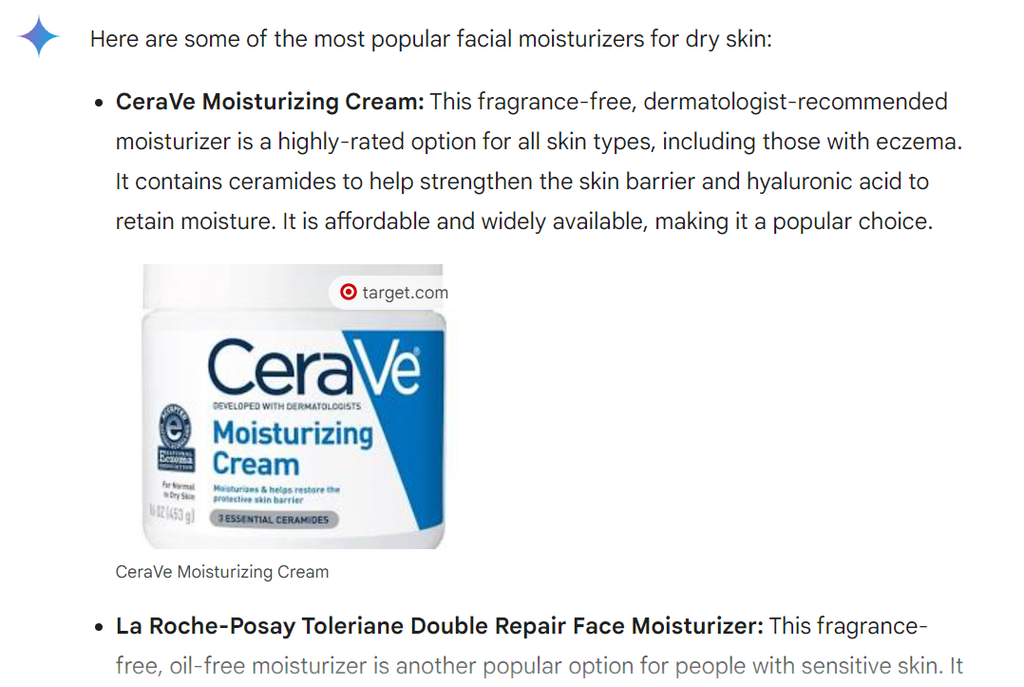
In keeping with that reinterpretation, all 3 recommended moisturizers were top sellers by volume, according to industry data, and were well reviewed (4+ stars).
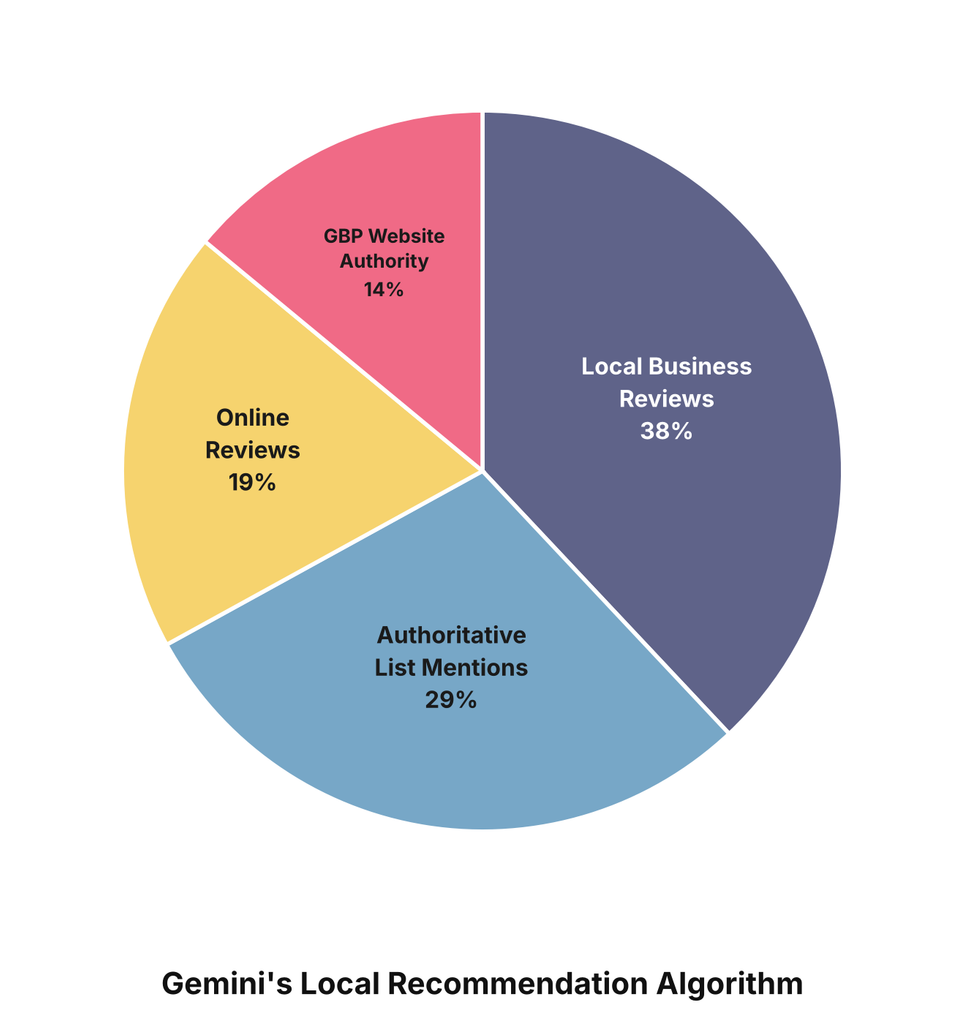
Gemini uses a different recommendation algorithm for local commercial queries such as “Can you recommend a plumber near Rockville, MD?” While authoritative list mentions still factor into its recommendations, a high star rating on Google Business Profile correlates most strongly with receiving a recommendation. Gemini also considers non-Google reviews, such as those from Yelp, TripAdvisor, and Angie’s List.
Claude’s Recommendation Algorithm
Claude AI has changed considerably since our original study. Unlike earlier iterations that relied solely on static training data, Claude now incorporates live web search. Anthropic has not officially named the backend, but Brave Search appears on its subprocessor list, and independent testing has found Claude’s citations overlap heavily with Brave’s top organic results, with reported match rates ranging from roughly 79% to 87% across different samples.
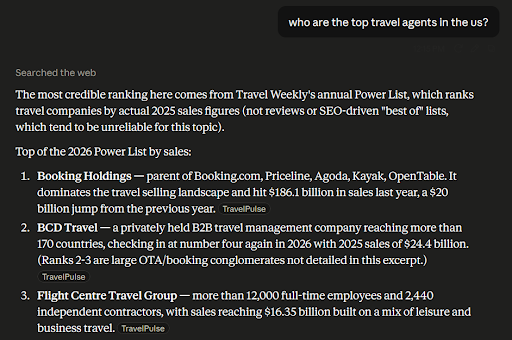
For commercial queries (e.g., “best,” “top,” and comparison-style prompts), Claude triggers a web search 67–81% of the time, pulling directly from Brave’s top 10 results without significant re-ranking. This makes Claude’s recommendations more directly tied to observable search rankings than either of the other 2 chatbots. When web search is not triggered, Claude falls back on its training data, which skews toward larger, more established companies and traditional business directories.
Unlike ChatGPT and Gemini, Claude does not meaningfully factor in online reviews when making recommendations. Within the retrieved Brave Search results, it weights authoritative list mentions most heavily, followed by awards, accreditations, and affiliations, and to a lesser degree, customer examples and usage data.
Unlike ChatGPT and Gemini, Claude does not attempt to recommend local businesses.
The Future of Generative Engine Recommendations
Across every update to our study, one trend has been unmistakable: generative AI chatbots are moving away from static training data and toward live web search as the foundation of their commercial recommendations. Claude’s shift is the clearest example, but ChatGPT and Gemini have followed the same trajectory as their search capabilities have broadened. The practical consequence is twofold:
- GEO and SEO continue to overlap heavily. Because all 3 engines now draw primarily from top-ranked search results, a company’s visibility in AI recommendations depends heavily on its presence in the highly ranked lists, reviews, and directories those engines retrieve. Authoritative list mentions are already the most heavily weighted factor across all 3 chatbots, and we expect that dominance to persist for as long as the engines rely on search results to ground their answers.
- Third-party authority with consistent messaging reigns supreme. At the same time as SEO principles like clearly-differentiated landing pages and presence on high-authority lists matter more than ever, GEO diverges from SEO in its focus on third party reputation. Thus, consistent messaging that a company is strong around a particular product or service on a diversity of websites; good reviews; and positive social sentiment has a large impact on whether AI platforms recommend a company.
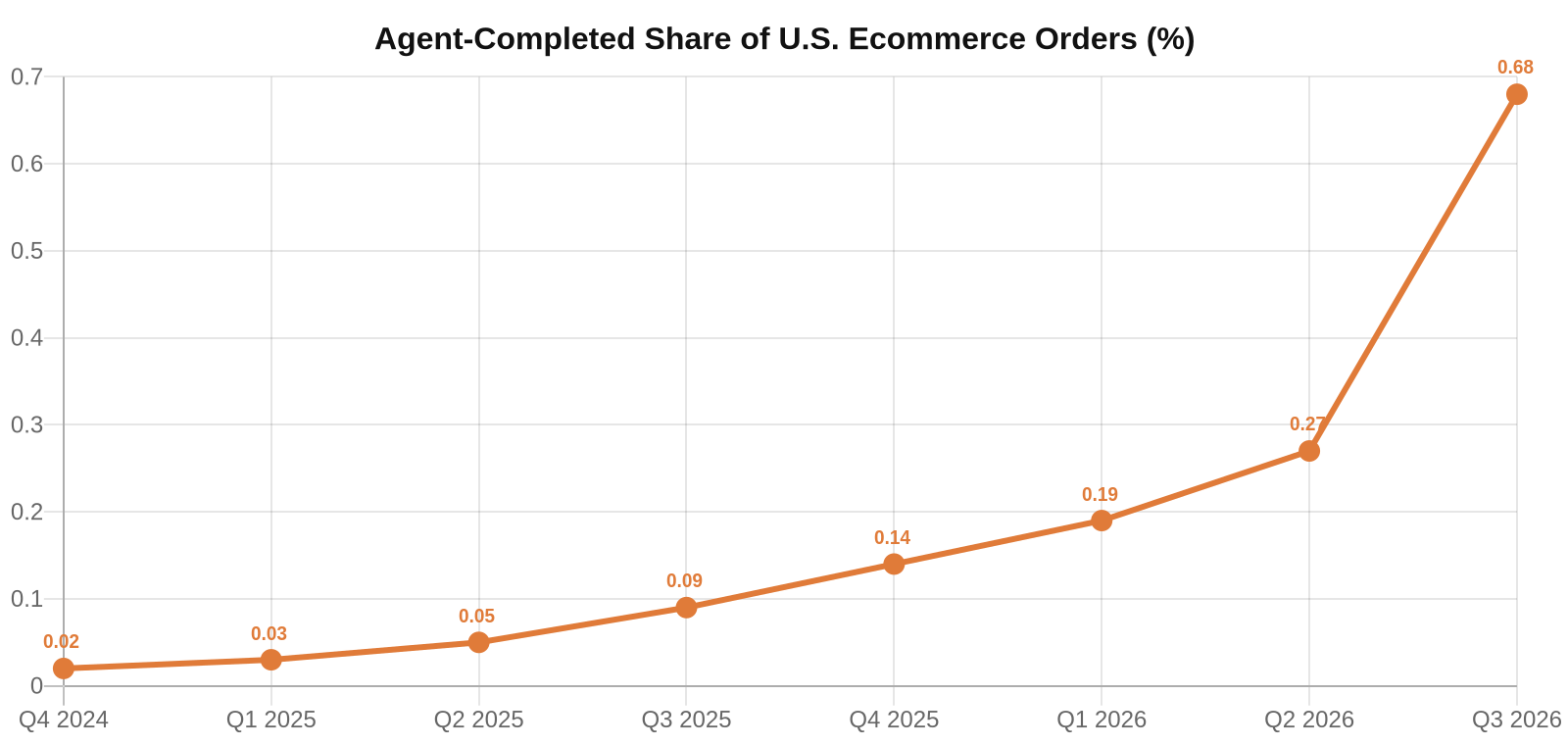
Apart from those two pillars, today’s GEO environment points to personalization mattering more than ever before. In October 2026, ChatGPT rolled out a new interface to help searchers describe what they’re seeking better. All the AI platforms ask questions reflexively as a follow-up to queries. The more the AI platforms know about you and your query, the more hyper-personalized the results will get – particularly as we enter the age of Agentic Search Optimization. Practically speaking, that means that suitability pages will continue to be an important practice.
As the body of GEO research grows, we will continue to monitor these engines and update our findings as their algorithms evolve.
Downloading This Report & Inquiries
If you have any questions about this report or would like a PDF copy, you can reach out to us here.
First Page Sage also provides GEO services. If you’d like to learn more, inquire here.