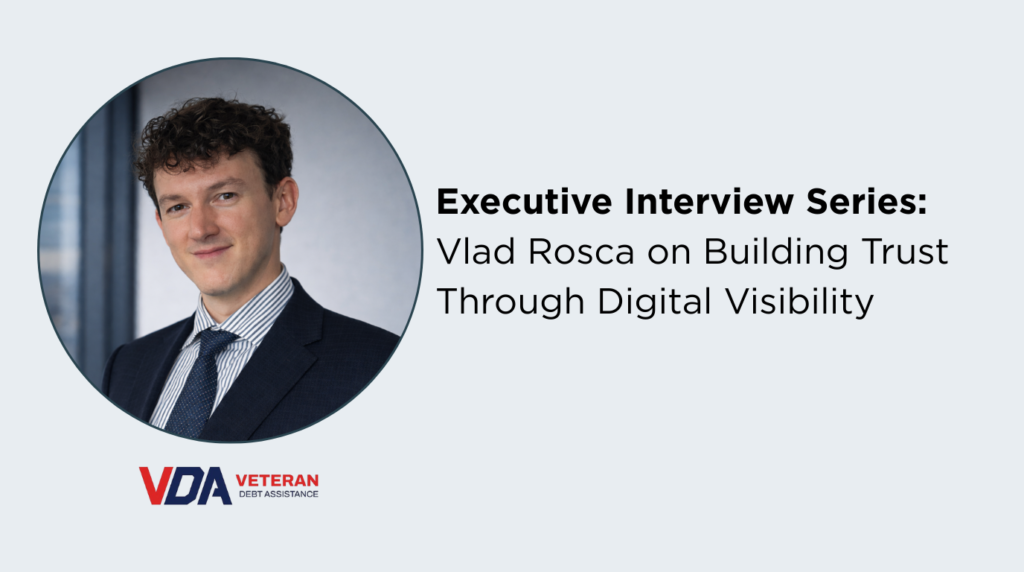
When veterans search online for help with debt, they’re often met with predatory lenders, hidden fees, and programs that promise relief but deliver more financial pain. That’s why we wanted to speak with Vlad Rosca, CEO of Veteran Debt Assistance, an organization that provides 100% free financial education and debt-relief tools designed exclusively for U.S. veterans and their families—no fees, no upsells, no credit checks required.
Unlike traditional debt relief companies that charge thousands in fees or require credit checks that further damage a veteran’s financial standing, VDA operates on a fundamentally different model: everything is free, and everything is built specifically for the veteran community. Rosca, a seasoned expert in credit and lending strategy, has built VDA into a trusted resource that recently donated $25,000 to Disabled American Veterans (DAV) and partners with Fisher House Foundation and the Navy SEAL Foundation.
At First Page Sage, we know that digital visibility can be the difference between a veteran finding legitimate help or falling into a debt trap. We sat down with Rosca to understand how VDA is reaching veterans who need real help—not another sales pitch.

First Page Sage: Vlad, in an industry full of scams, how do you use your digital presence to build trust with veterans before they ever contact you?

Vlad Rosca: Digital trust starts with transparency in every touchpoint—from website copy to social media to search results. At Veteran Debt Assistance, we lead with our core promise on every page: 100% free financial education and debt-relief tools—no fees, no upsells, no credit checks required. We make sure this messaging is consistent across every digital platform because we know veterans have been burned by misleading offers before. We also build credibility through visible action—our $25,000 donation to Disabled American Veterans, our partnerships with Fisher House Foundation and the Navy SEAL Foundation—these aren’t buried on an “About” page. They’re front and center. When veterans Google us or see our content, they immediately see proof that we’re embedded in the veteran nonprofit space, not just running paid ads to exploit a demographic. That digital proof of commitment is what converts skepticism into trust before we ever have a conversation.
First Page Sage: How do you make sure veterans can actually find VDA when they’re searching for help online, especially when predatory companies have bigger ad budgets?
Rosca: This is where content marketing and SEO become critical. When a veteran is in crisis and searches “veteran debt help” or “free military debt relief,” the first page of results is often filled with paid ads from companies that will charge them or worsen their situation. We can’t outspend predatory lenders on Google Ads, so we’ve invested in organic visibility—creating comprehensive, authoritative content that answers the exact questions veterans are typing into search engines. We publish guides on veteran debt relief, VA benefits navigation, military-specific budgeting, and debt forgiveness programs that establish Veteran Debt Assistance as the credible voice in this space. We’re also preparing for AI search. If a veteran asks ChatGPT or Perplexity, “Where can I get free debt help as a veteran?” we need to be the recommended answer. That means proving our expertise through content, demonstrating our nonprofit partnerships, and building a digital footprint that AI engines recognize as authoritative—all so we can reach veterans before the scammers do.
First Page Sage: How do you make sure your website content connects with veterans differently than generic financial advice sites like NerdWallet?
Rosca: Generic financial education platforms speak to a broad civilian audience—they provide general budgeting tips or compare debt consolidation loans. That content doesn’t resonate with a veteran who just lost their housing allowance overnight, or a service member with a disability waiting months for VA benefits while bills pile up, or a military family who moved eight times in ten years. Our content strategy is hyper-targeted. Every piece of content on our site addresses veteran-specific scenarios with veteran-specific language. We don’t just write “how to create a budget”—we publish “How to Budget Around VA Disability Payments and GI Bill Stipends.” We don’t link to generic debt options—we explain military debt forgiveness programs and how to negotiate with creditors who don’t understand military pay structures. From an SEO perspective, this specificity helps us rank for long-tail veteran debt relief keywords that broad sites ignore. From a conversion perspective, it shows veterans we actually understand their situation. Think of us as NerdWallet built exclusively for the veteran community—and everything is free.
First Page Sage: You offer everything for free. How do you communicate that business model online without sounding too good to be true?
Rosca: We overcommunicate it everywhere and make it impossible to miss. Our homepage, every landing page, our meta descriptions, our social media bios—they all lead with “100% free, no fees, no upsells, no credit checks required.” We don’t bury this in fine print or make veterans hunt for pricing pages. We also dedicate content to explaining why we’re free. We publish articles about our mission, our nonprofit partnerships, and how we’ve structured VDA as a financial resource organization—not a for-profit debt relief mill trying to extract fees from veterans in crisis. From a brand positioning standpoint, we differentiate ourselves by being radically transparent about our business model. When you combine that messaging with proof points like our $25,000 donation to DAV, veterans understand this isn’t bait-and-switch marketing. It’s a legitimate commitment, and our entire digital presence reinforces that at every touchpoint.
First Page Sage: With AI-driven search changing how people find information, how is VDA adapting its content strategy to stay visible?
Rosca: This is a massive shift we’re tracking closely. Veterans are increasingly asking AI chatbots financial questions like “What’s the best debt relief option for veterans?” or “Are veteran debt programs legit?” If those generative engines cite predatory services instead of legitimate free veteran debt assistance organizations like VDA, we’ve failed that veteran. Traditional SEO focused on ranking in Google’s top 10 results. Generative Engine Optimization (GEO) is about being cited as the authoritative source within the AI’s answer. That requires even more emphasis on demonstrating first-party expertise, original insights, and credible partnerships. We’re making sure our content shows clear authority—our CEO’s expertise in credit and lending, our nonprofit work, our veteran-specific tools—so AI models recognize us as the definitive source for veteran financial education. It’s not just about being found anymore; it’s about being recommended by the AI itself. And in a space full of predatory actors, being that recommended source could literally save a veteran from financial ruin.