In search marketing, strategy alone is never enough.
Even the strongest SEO frameworks—those grounded in data, research, and algorithmic insight—can break down without consistent execution, monitoring, and adaptation over time. Rankings don’t improve because of ideas alone; they improve because teams can plan effectively, evaluate performance, respond to data, and stay aligned with long-term objectives in a constantly changing search landscape.
The same principle applies to people and teams.
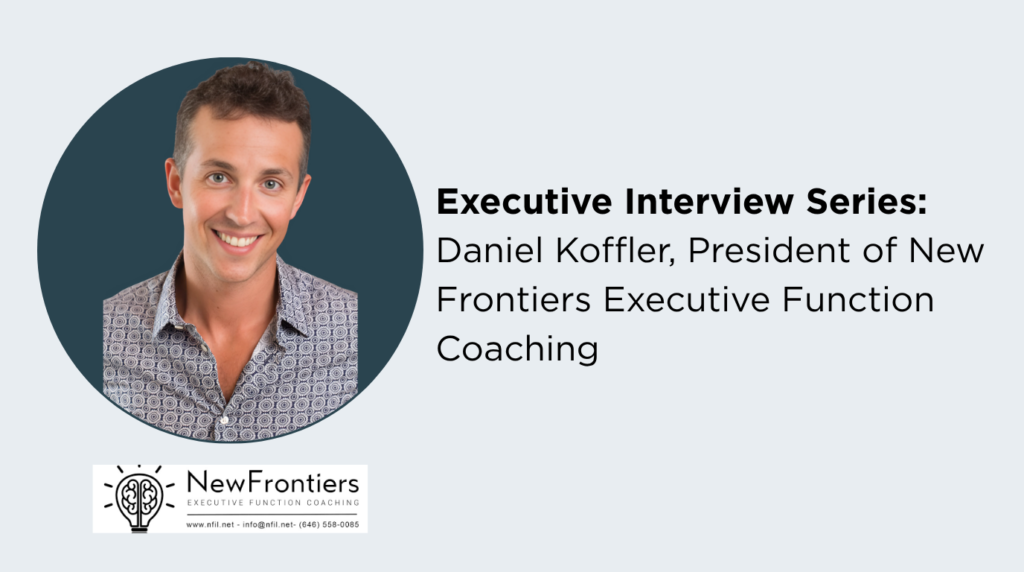
That’s the lens Daniel Koffler, President of New Frontiers Executive Function Coaching, brings to organizational performance. New Frontiers is one of the nation’s leading organizations focused on helping adults and professional teams manage complex demands by strengthening the cognitive systems that support planning, prioritization, adaptability, and follow-through. With tens of thousands of hours spent working with high-performing professionals, the organization has developed deep insight into why well-designed strategies so often fail at the execution level.
In this conversation with First Page Sage, Koffler explores how effective SEO systems mirror human self-management—and why executive function is the often-overlooked factor that determines whether strategy compounds or stalls.

First Page Sage: SEO teams live and die by performance data. How does that translate to executive function at the individual level?

Daniel Koffler: SEO teams don’t publish content and wait passively for results—they monitor rankings, evaluate traffic patterns, and adjust based on feedback. That same feedback loop exists at the individual level through executive function.
Self-monitoring allows people to notice whether their effort aligns with their goals and whether their current approach is producing results. When that internal feedback system is weak or overloaded, issues often go unnoticed until deadlines are missed or teams feel overwhelmed. Designing systems that support awareness—rather than relying on memory or intuition—allows people to make informed adjustments as they work, not just after something breaks.
First Page Sage: Many organizations understand what they should be doing in SEO, yet struggle to sustain execution. Where does executive function show up in that gap?
Koffler: Most execution challenges aren’t about intelligence or buy-in—they’re about capacity. SEO requires sustained effort over time: content planning, technical upkeep, cross-functional coordination, and continuous iteration.
Executive function supports the ability to translate long-term strategy into daily action, manage competing priorities, and maintain consistency when results take time. When those cognitive systems are overloaded, teams become reactive—jumping between tasks, chasing short-term wins, or abandoning initiatives too early.
Execution improves when systems reduce decision fatigue and make priorities explicit.
First Page Sage: Adaptability is critical in search. How does adaptability function at the human level?
Koffler: Adaptability works best when it’s anchored by structure. In SEO, you don’t pivot constantly—you evaluate performance and make deliberate decisions about when to adjust and when to stay the course.
At the human level, executive function supports that discernment. It allows teams to pause, reflect, and decide whether a signal warrants change or persistence. Without that pause, adaptability turns into reactivity. With it, adaptability becomes strategic.
First Page Sage: SEO teams rely on increasingly complex tool stacks. Do tools always improve performance?
Koffler: Only when they reduce cognitive load. Tools that fragment attention or require people to hold too much in their heads often slow execution rather than accelerate it.
Effective tools externalize thinking. They make progress visible, next steps clear, and ownership defined. When tools replace mental effort instead of adding to it, consistency becomes sustainable.
First Page Sage: What patterns do you see in teams that consistently execute well?
Koffler: They design for human limitations. They assume attention is finite. They reduce ambiguity and clarify ownership. And they regularly review their systems—not just their results.
Execution isn’t a one-time setup. It’s a living process. Teams that treat it that way maintain momentum without burning out, even as algorithms and markets evolve.
First Page Sage: If you could leave search leaders with one insight, what would it be?
Koffler: If execution feels hard, it’s rarely a willpower problem—it’s a design problem.
Strategies succeed when they align with how people actually think, focus, and adapt over time. When human execution systems are built intentionally, strategy compounds naturally.
First Page Sage focuses on building SEO strategies grounded in research, data, and long-term thinking. New Frontiers focuses on the human systems responsible for carrying those strategies forward. Together, they highlight a shared truth: scalable growth depends on both smart systems and the cognitive capacity of the people running them.